Real Estate & Development
Residential or Commercial: Underwriting the Highest and Best Use
The strongest development strategy begins with the market, the asset, and the investor's capacity - not a preference for one property type.
Residential and commercial development can both create meaningful long-term value, but they do so through different demand patterns, operating models, timelines, and risk profiles.
The right choice is not determined by which category appears more attractive in general. It is determined by the specific market, the property, the development team, the capital structure, and the intended investment horizon.
Start with the demand
Residential development responds to the need for places to live. Demand is shaped by population growth, household formation, affordability, schools, employment, transportation, and lifestyle preferences. Commercial development responds to the needs of businesses and institutions, including how they serve customers, employ people, distribute products, and use physical space.
A market may show strong demand in one category and limited opportunity in another. Broad headlines about housing, retail, offices, or industrial property cannot replace local analysis. The relevant question is whether a clearly defined user needs a particular type of space in that location.
Understand how the asset produces value
Residential projects may create value through home sales, long-term rental income, appreciation, or a combination of these outcomes. Commercial assets commonly depend on tenant quality, lease structure, occupancy, operating expenses, and the property's ability to remain relevant to business users.
These distinctions affect the underwriting. Residential projects may require close attention to absorption, unit mix, construction pace, and buyer or renter affordability. Commercial projects may require greater focus on tenant commitments, improvement allowances, lease terms, credit quality, and re-leasing risk.
Compare complexity and timing
Every development involves approvals, design, financing, construction, and market risk. The form of that complexity differs by property type. A residential community may involve multiple units, amenities, phased delivery, and ongoing sales or leasing. A commercial project may require specialized building systems, tenant-specific design, and longer negotiations before occupancy.
Timing also influences risk. A project that takes several years to complete may enter a different interest-rate, construction-cost, or demand environment than the one in which it was conceived. The development plan should therefore include realistic contingencies and decision points.
Choose the opportunity that fits the organization
A compelling market opportunity can still be the wrong project for a particular investor or development team. Experience, operating capacity, available relationships, capital requirements, and tolerance for uncertainty all matter.
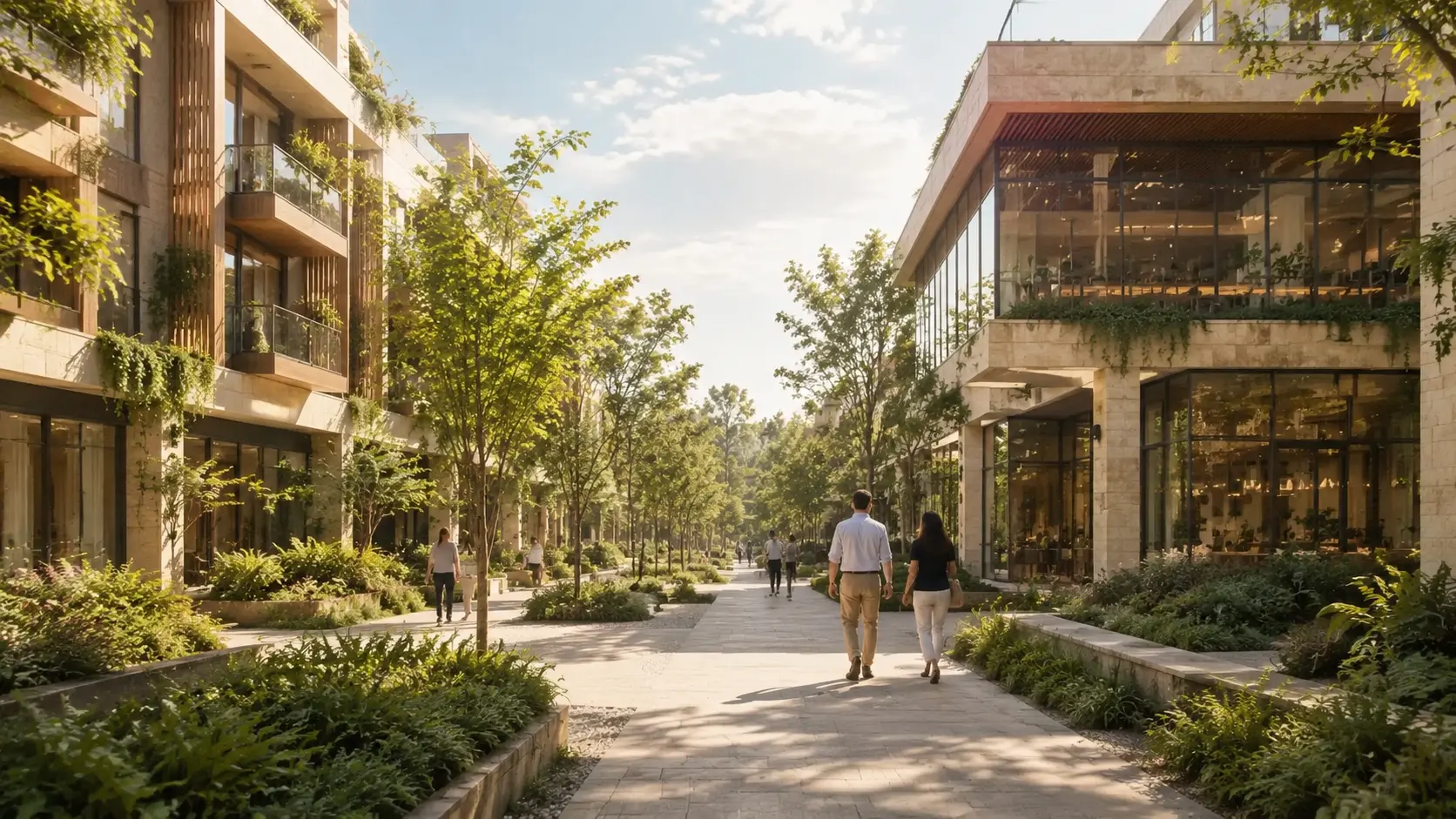
The strongest choice is usually the one in which market demand, property economics, team capability, and long-term strategy reinforce one another. In some cases, that may be residential. In others, commercial. It may also be a mixed-use or value-add project that combines elements of both.
Successful development is not about selecting a fashionable asset class. It is about identifying a real need, understanding the economics, and executing a plan that can create lasting value. SDG Real Estate & Development evaluates opportunities through that broader lens.
Considering a residential or commercial opportunity? Connect with Sterling Development Group to begin the evaluation.
✦ Connect With an Advisor